Season by season
December–February
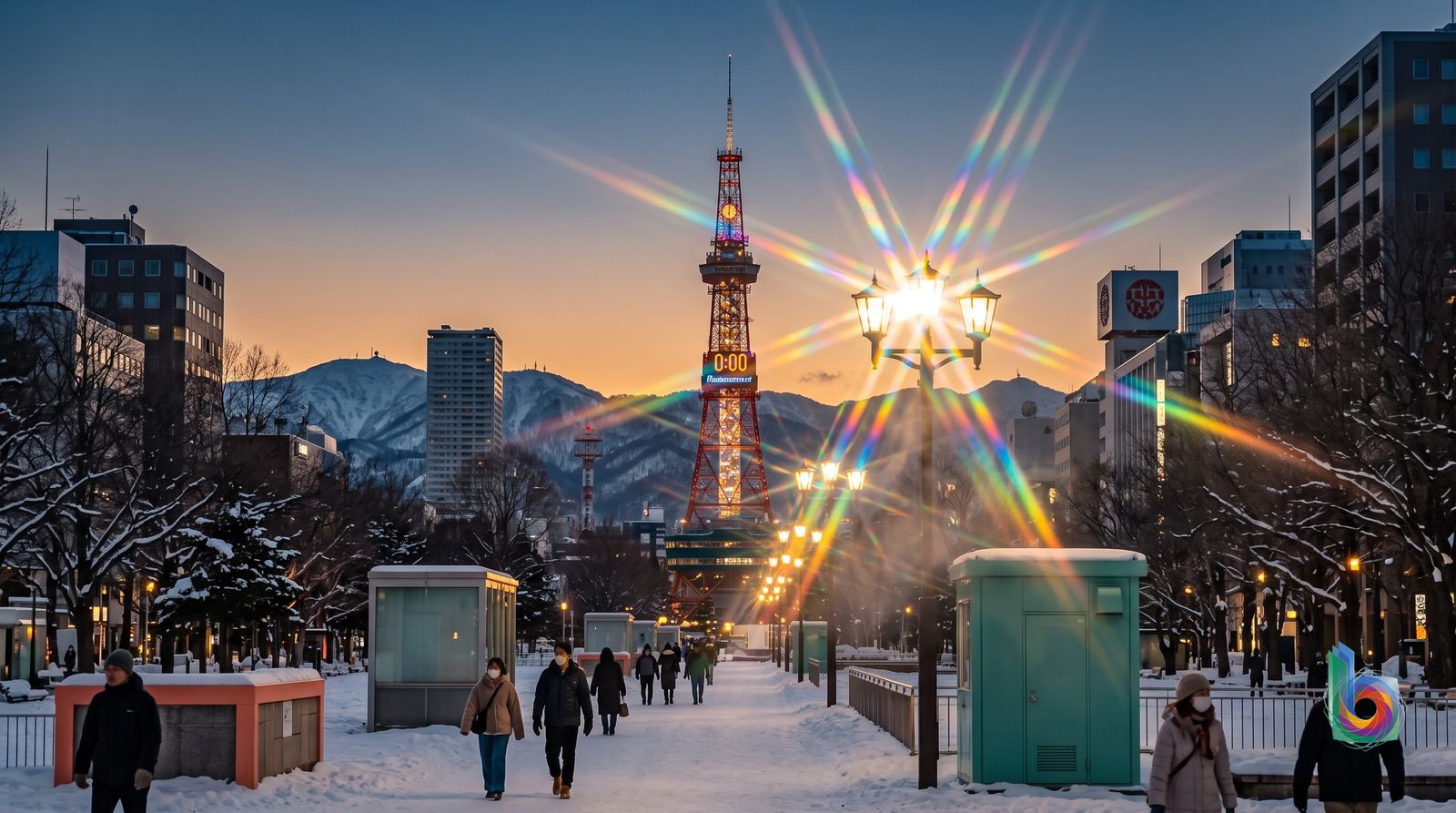
Full winter: heavy snow, short daylight and icy or snowbound pavements make ordinary city walking slower and less pleasant. Sapporo receives around six metres of snow annually, but this is the season the city is built for if snow is the reason for coming.
Bring footwear with real grip and allow extra time. In the first week of February, festival crowds and sharply higher hotel demand are a major constraint.
March–April
Late, transitional spring. Snowmelt and lingering cold can make the city feel slushy rather than picturesque; conditions are less reliable than the calendar suggests.
Not the best period for parks, boulevards or easy outdoor wandering; winter conditions can linger.
May–June
The first of Sapporo’s two best general-sightseeing windows: parks and boulevards become enjoyable, with generally comfortable temperatures and none of Japan’s worst summer heat.
Late May is the safer bet for fully settled spring weather; this is pleasant rather than hot, so pack a layer for cooler days and evenings.
July–August
Summer is pleasantly cooler than much of Japan, making Sapporo a useful escape from the country’s more oppressive heat.
It is busier than the shoulder seasons, so expect more competition for central accommodation and popular restaurants.
September–October
The other prime window for ordinary sightseeing: generally comfortable temperatures and good conditions for walking the central grid, parks and boulevards.
Autumn-color timing varies from year to year; do not build an itinerary around an exact peak date.
November
A quiet transition toward winter, with shortening days and increasingly cold conditions before the reliable deep-snow period.
It lacks the dependable sightseeing comfort of September–October and the purposeful snow appeal of midwinter; weather can feel grey and in-between.
Events worth planning around
Sapporo Snow Festival · Usually the first week of February
This is Sapporo’s major city-filling event: snow and ice displays are spectacular, but accommodation books out and prices rise. There is no general festival-entry ticket; reserve a hotel as soon as dates are fixed, ideally months ahead.
Getting around
Walking & underground passages
The central grid: Sapporo Station, the Clock Tower, Ōdōri, Tanukikōji and Susukino. It is flat and logical, with Ōdōri Park marking the north–south divide and the Sōsei River the east–west one.
Use the numbered street grid and walk the core in good weather. In winter, rely heavily on the underground passages linking Sapporo Station, Ōdōri and Susukino; they are the practical alternative to icy pavements, not just a convenience.
Distances look deceptively short on the grid: the blocks are large. Winter snowbanks and ice make the exposed walk between districts slow, while Maruyama, the Beer Museum/Naebo area, Shiroishi and Jōzankei are not sensible central-city walks.
Subway
The default for longer central hops and for reaching residential west/east districts. All three lines meet at Ōdōri; use the Namboku line for Sapporo Station, Susukino and Nakajima-Kōen, and the Tōzai line for Maruyama-Kōen and Shiroishi.
Buy single tickets (roughly ¥210–380) or tap an existing Suica, PASMO or ICOCA. Kitaca is the useful local choice because it also works on JR; SAPICA is less flexible for visitors.
The network is excellent in the core but does not solve every last mile. The Beer Museum/Naebo area has no convenient downtown subway stop at the door, Mt. Moiwa requires tram/bus-side connections, and Jōzankei is bus territory. Shiroishi's subway station and JR Shiroishi are separate stations—do not plan a quick interchange.
Streetcar
A slow, scenic ride around the southwest corridor from Susukino, especially when combining it with Mt. Moiwa and its ropeway. It is also handy for short moves around Tanukikōji via Nishi 4-chōme and Tanukikōji stops.
Board it as a local tram, rather than treating it as the city’s main sightseeing circuit. Start from the Susukino end and allow time for the ropeway connection if Mt. Moiwa is the goal.
It is charming but niche: the tram is slower and less direct than the subway, and the Mōiwa corridor is spread out. It does not help with Sapporo Station, the Beer Museum, Shiroishi or Jōzankei, and winter walking between stops can be slippery.
Bus
Gaps beyond the subway: the Sapporo Beer Museum/Naebo last mile, the Mt. Moiwa ropeway approach, and—most importantly—Jōzankei Onsen, which is primarily reached from central Sapporo by bus.
Use buses as a targeted connection rather than a substitute for the subway in downtown. For Jōzankei, allow roughly an hour each way from central Sapporo and check your accommodation’s specific access arrangements.
Bus travel is less flexible than rail, particularly in poor winter weather. Jōzankei is not somewhere to shuttle back and forth from downtown repeatedly, and the Beer Museum area is an outing with a slightly awkward last mile rather than a seamless stop on the central network.
Taxi
Late-night returns, luggage, bad weather, the Beer Museum/Naebo last mile, or when a group makes the cost more tolerable. It is the dependable fallback after an evening in Susukino or when snow makes walking unattractive.
Use regular taxis; rideshare is not a practical replacement in Sapporo. Confirm the destination on a map or by building name, especially where numbered addresses cover large blocks.
Taxis are expensive for routine sightseeing. They are a poor value for easy subway corridors such as Sapporo Station–Ōdōri–Susukino, and are not a realistic way to turn Jōzankei into a casual downtown side trip.
JR & regional rail
Airport transfers and day trips, not ordinary city sightseeing. JR Sapporo is the hub for the Rapid Airport from New Chitose and for trains to places such as Otaru, Hakodate and Asahikawa.
Keep JR separate in your mind from the subway: Kitaca works on both, while the subway is the tool for the central districts. Base yourself near Sapporo Station if you expect early departures or several rail day trips.
JR has limited usefulness within the visitor core. Naebo is rail-adjacent but not a convenient substitute for central subway access, and JR Shiroishi is not beside the Tōzai-line Shiroishi station.
Safety: Sapporo is generally very safe, but in Susukino avoid aggressive touts and confirm prices before entering any bar or club; in winter, use the underground passages and wear grippy shoes to avoid icy pavements.
Book before you land
Sapporo Snow Festival: there is no general festival-entry ticket, but book accommodation as soon as dates are fixed—ideally months ahead—for the first week of February. This is the period that genuinely fills the city. · Shiroi Koibito Park cake buffet: reserve at least three days ahead if you specifically want it. The grounds are free and do not require prebooking. · For normal dates, Sapporo’s core sights—Clock Tower, Sapporo Beer Museum self-guided visit, TV Tower, JR Tower and Mt. Moiwa—are not the sort of attractions that justify building a trip around advance tickets. Check official sites close to travel for special exhibitions, ski buses and seasonal operating changes.
- Do not tip. Service is already built into the experience; leaving cash can create awkwardness rather than gratitude.
- Carry some cash, especially for small eateries, markets, lockers and older businesses, but use contactless/IC payment where accepted. An existing Suica/PASMO/ICOCA works on Sapporo transit; Kitaca is the local all-purpose choice for visitors.
- Downtown public streets and public buildings are smoke-free outside designated areas. Do not light up while walking; use marked smoking rooms.
- Use the grid, not vague neighborhood directions: addresses such as ‘North X, West Y’ are signed at intersections. Still, check the building name or map pin—one numbered block can be large.
- In winter, wear shoes with real grip and leave extra transfer time. The underground passages around Sapporo Station, Ōdōri and Susukino are not merely convenience routes; they are the sensible way to avoid icy streets and blizzards.
- Sapporo is generally very safe, but Susukino is a major nightlife district. Treat it like any entertainment quarter: avoid aggressive touts and confirm prices before entering a bar or club.
Worth leaving the city for
OtaruHalf day to a relaxed full day. JR trains from Sapporo take just under 1 hour each way.
The best easy escape from Sapporo: a compact port town with a canal, excellent seafood, glass workshops and music-box kitsch that is admittedly touristy but far more atmospheric than another afternoon around Ōdōri. Go late afternoon and stay through dusk, when the canal is at its best.
Noboribetsu Onsen and JigokudaniFull day. Noboribetsu is about 1 hour 10 minutes from Sapporo by limited express, before the onward local connection to the onsen area.
Choose this over more urban sightseeing if you want Hokkaido’s volcanic side: proper sulfurous hot springs and the Hell Valley landscape, not a city spa with a mountain theme. It is a long day, and the town itself is built around the onsen rather than conventional sightseeing.
Jōzankei OnsenHalf day to full day. Public buses run from JR Sapporo Station; the area is roughly 40–60 minutes by road from central Sapporo.
The sensible hot-spring day when you do not want to sacrifice the whole day to transport. It delivers riverside onsen and especially strong autumn colour around Hōheikyō Dam; outside foliage season, go primarily to soak, not to tick off sights.
Asahikawa and Asahiyama ZooA long full day. Limited-express Lilac or Kamui takes about 1 hour 30 minutes each way to Asahikawa, plus the zoo transfer.
Worth the haul for travelers who genuinely want the zoo: Asahiyama is Japan’s best-known zoo, with unusually close-viewing exhibits for penguins, seals and polar bears. Winter is the most memorable setting, though some exhibits close; do not make this trip expecting Asahikawa itself to compete with a full extra day in Sapporo.
NisekoFull day at minimum in winter. Buses take about 2 hours each way.
Only a clear winner in ski season. For serious powder skiing or boarding, Niseko is the reason to leave Sapporo; without snow, the transit burden makes it a weak day trip and it is better treated as an overnight destination.