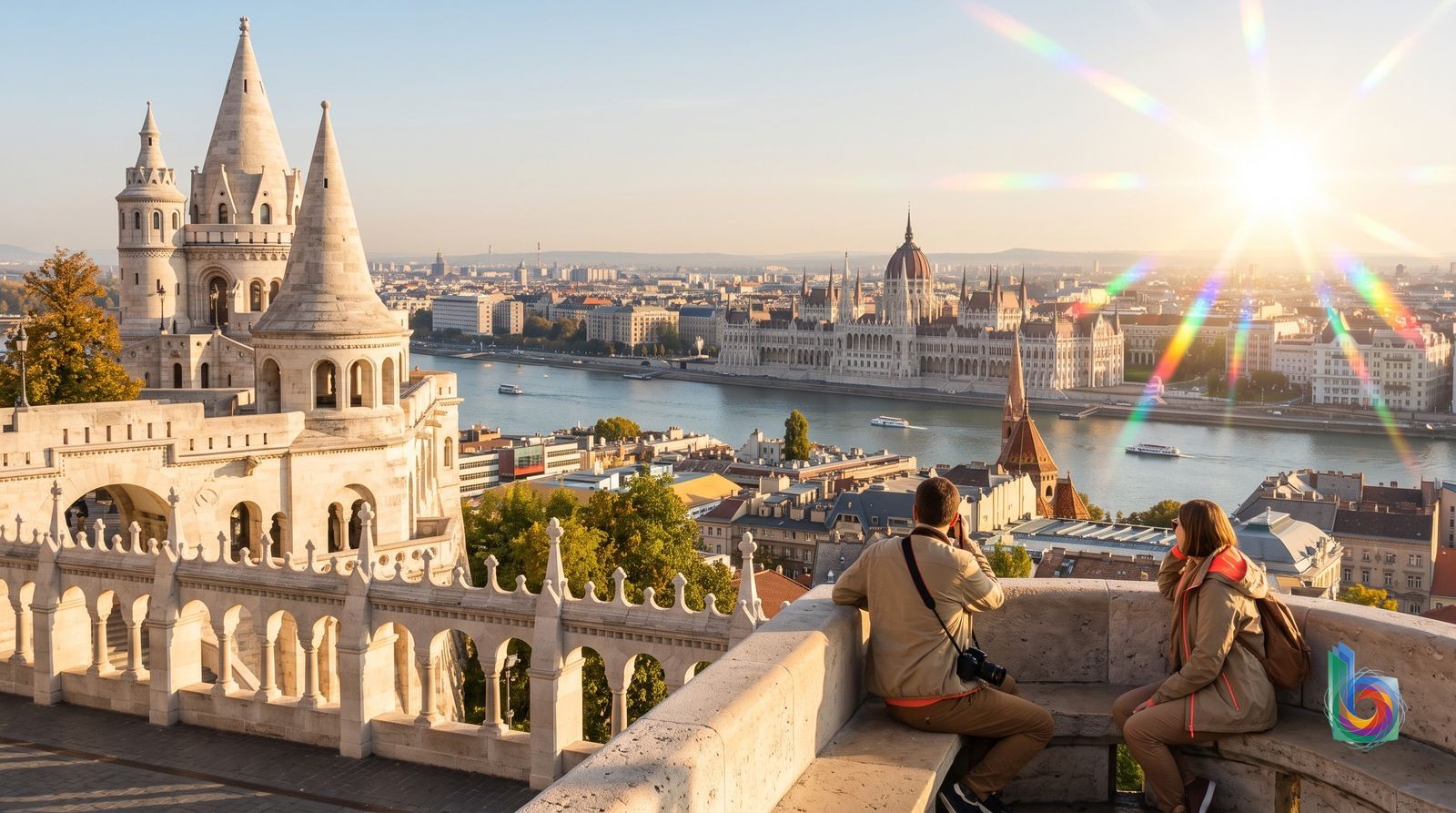

This is Budapest's most recognisable riverside panorama, framing Parliament across the Danube from the Castle Hill side. Walk it early or after dark, then use it as the starting point for the compact Castle District rather than treating it as a long standalone stop.
45m FreeArrive before 9am, or go after sunset when day-tour groups have left.
Pairs with: The Church of Our Lady of Buda Castle · Buda Castle · Hospital in the Rock Nuclear Bunker Museum

The huge palace complex matters chiefly for its setting, courtyards and role as the anchor of Castle Hill; the royal interiors are not preserved as a palace visit. Allow extra time only if you choose one of its museums, especially the Hungarian National Gallery.
1.5h FreeCome in the morning for the courtyards and views, before Castle Hill fills with groups.
Pairs with: Fisherman's Bastion · The Church of Our Lady of Buda Castle · Hospital in the Rock Nuclear Bunker Museum

The Chain Bridge is the classic walk between Pest's riverfront and Castle Hill, with better value as a crossing than as a photo-only stop. Build it into a Danube walk, ideally linking central Pest with the Buda viewpoints.
20m FreeCross near dawn or after dark for lighter foot traffic and the best illumination.
Pairs with: Hungarian Parliament Building · Buda Castle · St. Stephen's Basilica

The sixty pairs of iron shoes commemorate Jews murdered on this riverbank by Arrow Cross militiamen in 1944–45. It needs only a short visit, but allow quiet time and pair it with Parliament rather than treating it as a casual photo stop.
20m FreeGo early in the morning or near dusk for a more reflective visit.
Pairs with: Hungarian Parliament Building · Széchenyi Chain Bridge · Dohány Street Synagogue

Better known as Matthias Church, this is the Castle District's essential interior: richly painted, historically layered and far more substantial than its exterior suggests. Combine it directly with Fisherman's Bastion, and consider the tower only if you want another elevated view.
45m Walk upAim for opening time and check service times, when tourist entry can be restricted.
Pairs with: Fisherman's Bastion · Buda Castle · Hospital in the Rock Nuclear Bunker Museum

Budapest's defining Danube landmark is worth seeing from both banks, while the guided interior tour adds the dome hall and Crown of St. Stephen. Book the tour if the interior matters to you; otherwise a riverside walk and a Buda-side view deliver the architecture.
1.3h Book aheadPhotograph it from the Buda bank around blue hour; take the interior's first available timed tour.
Reserve an official timed tour at least 1–2 weeks ahead in high season; English-language slots go first.
Pairs with: Shoes on the Danube Bank · Széchenyi Chain Bridge · St. Stephen's Basilica

The city's principal Catholic church is a useful central-Pest anchor, with a grand dome interior and a strong rooftop viewpoint. Visit the church and, if weather permits, take the dome terrace rather than lingering only in the square.
45m Walk upGo near opening on a weekday; the dome terrace is clearest in the morning.
Pairs with: Vörösmarty Square · Hungarian Parliament Building · Széchenyi Chain Bridge

The oversized yellow neo-Baroque bath is Budapest's most accessible classic thermal experience, especially for a first visit. Treat it as a half-day reset after City Park sightseeing, not merely a quick swim; its appeal is the hot outdoor pools and social bath culture.
3h Book aheadEnter at opening on a weekday, before tour groups and local after-work visitors arrive.
Buy an online day ticket for a weekday morning in peak periods; weekend entry and cabins are more expensive and busier.
Pairs with: Heroes' Square · Vajdahunyad Castle

The grand Millennium Monument is an effective introduction to Hungary's national narrative and the formal gateway to City Park. It is a brief stop on its own, so combine it with the park, Vajdahunyad Castle and a thermal-bath session.
25m FreeLate afternoon is quieter than the midday coach-tour window.
Pairs with: Vajdahunyad Castle · Széchenyi Thermal Bath · House of Terror Museum

This fanciful castle-like complex is a compact sampler of Hungarian architectural styles, built for the 1896 millennium exhibition. See it as part of a relaxed City Park circuit rather than expecting a major historic castle interior.
35m FreeWeekday mornings are especially pleasant; the grounds get busy on sunny weekends.
Pairs with: Heroes' Square · Széchenyi Thermal Bath

The Citadel occupies Gellért Hill's broad summit and provides the most expansive central-Budapest panorama, even though the fortress itself is secondary to the view. Use it for a hill walk from the river; restoration work can alter access to individual sections.
1h FreeClimb for sunset, but start early enough to descend safely before the paths become dark.
Pairs with: Gellért Hill Cave · Széchenyi Chain Bridge

Europe's largest synagogue is an essential place to understand Budapest's Jewish life, the Holocaust and the former ghetto, especially through its cemetery and memorial garden. Allow enough time for the included exhibition rather than just viewing the Moorish Revival façade.
1.5h Timed entryTake an early weekday slot, avoiding Friday afternoon and Jewish holiday closures.
Buy online for a preferred entry time in high season; bring identification and allow for security screening.
Pairs with: Shoes on the Danube Bank · Central Market Hall

In the former Arrow Cross and Communist secret-police headquarters, this powerful museum confronts Hungary's two twentieth-century dictatorships. Its presentation is emotionally intense and interpretive rather than neutral, so give it focused time and use it as a complement to the Jewish Quarter sites.
2h Walk upArrive at opening on a weekday; the entrance queue and narrow galleries build up quickly.
Pairs with: Heroes' Square · Dohány Street Synagogue · St. Stephen's Basilica

Budapest's grand iron-and-glass market hall is best for its architecture, food-stall atmosphere and an easy introduction to Hungarian ingredients, not bargain hunting. Come for a snack or picnic supplies, then continue along the river or toward the Inner City.
45m FreeGo soon after opening on a weekday; Saturdays are lively but very crowded, and it is generally closed Sunday.
Pairs with: Vörösmarty Square · Dohány Street Synagogue · Gellért Hill Cave

This former wartime emergency hospital and Cold War nuclear bunker is one of Castle Hill's most revealing interiors, turning abstract twentieth-century history into a tangible underground visit. Guided tours are the point, so fit it between the main Castle District sights rather than dropping in casually.
1.3h Book aheadChoose the first tour of the day for smaller groups.
Reserve a guided tour online for weekends and peak season; same-day places can disappear.
Pairs with: Buda Castle · Fisherman's Bastion · The Church of Our Lady of Buda Castle

This is a useful central-city orientation stop at the pedestrian end of Váci Street, rather than a destination requiring a special journey. It is most worthwhile during the Christmas market or as a quick pause while walking the Danube-facing Inner City.
15m FreeVisit in the morning if you want to see the square without shopping-street crowds.
Pairs with: St. Stephen's Basilica · Széchenyi Chain Bridge · Central Market Hall

This open-air collection of Communist-era statues is one of the city's most thoughtful historical detours, explaining what happened to official monuments after 1989. It is well worth the journey for political-history enthusiasts, but it is far from the central sightseeing circuit.
1.3h Walk upA weekday morning gives the quietest, most atmospheric experience; check transport timing before leaving central Budapest.

This small cave chapel, set into Gellért Hill, offers an unusual and quick counterpoint to Budapest's grand churches. It works best as a stop on the climb toward the Citadel or while walking between the Liberty Bridge and the hill paths.
25m Walk upGo during daytime opening hours; it is a functioning devotional site, so be respectful and check access around services.
Pairs with: Citadel · Széchenyi Chain Bridge

The remains of the Roman civilian town of Aquincum offer the clearest sense that Budapest was an important settlement long before the medieval and Habsburg city. It is a rewarding half-day for archaeology-minded visitors, but its northern location makes it optional on a short first trip.
2h Walk upVisit on a dry weekday morning, when the outdoor ruins are easiest to explore at an unhurried pace.